
Last updated October 31, 2026
 Home additions & ADU
 Kitchen remodeling
 Bathroom remodeling
 Roofing
 Windows & doors
 Driveway & pavers
 Fence
Free written scope consultation - allowances, timeline, and change-order rules on paper before a single trade is scheduled
Construction Warning Signs: A Rialto Homeowner’s Reference Guide
A horizontal crack in a concrete block retaining wall is a structural emergency. A vertical crack in the same wall is almost always settlement shrinkage. Rialto homeowners who can’t tell the difference are paying emergency rates for repairs that could wait, or ignoring ones that can’t. This guide teaches you to read the signs your house is giving you, so when you do pick up the phone, you’re describing a real problem, not a ghost—drawing on the same principles covered in our General Contractor Troubleshooting: Common Problems and How to Fix Them. In Rialto, where expansive clay soil and triple-digit summer heat put unique stress on foundations, slabs, stucco, and roofing, misreading a crack isn’t just expensive. It’s how small issues become structural failures.
Quick Answer
The construction warning signs that matter most in Rialto fall into four categories: crack patterns in concrete and stucco, efflorescence and water staining on masonry, ground-level roof distress, and interior symptoms like sticking doors and drywall cracks above frames. The key distinction is between active movement, which shows recent, widening, or offset cracks, and historic settlement, which shows stable, hairline, or filled cracks. Active movement requires professional assessment within weeks, not years.
Styles & brands we work with
Table of Contents
- Crack Typology for Rialto’s Expansive Soil Conditions
- Efflorescence and Water Staining: Tracing Moisture in an Irrigation-Heavy Landscape
- Roof Warning Signs Visible From Ground Level
- Interior Warning Signs That Correlate to Exterior Structural Issues
- How to Document and Photograph Warning Signs for an Accurate Assessment
- Common Mistakes to Avoid
- When to Call a Professional
- Frequently Asked Questions
Crack Typology for Rialto’s Expansive Soil Conditions
Rialto sits on some of the most reactive soil in the Inland Empire. The sandy loam and clay mixes that run through the city expand when wet and contract when dry. A single irrigation cycle or a wet winter can shift the ground under a slab by fractions of an inch. Over a decade, that movement adds up. The cracks it produces fall into patterns, and each pattern means something different.
Vertical cracks in concrete block and poured concrete walls. These are the most common and usually the least alarming. In a block retaining wall, a vertical crack that runs cleanly through mortar joints, not through the blocks themselves, is classic shrinkage. It happened as the wall cured, sometimes years ago. If the crack is hairline, stable, and shows no offset, meaning one side hasn’t moved forward or back relative to the other, it’s cosmetic. You can monitor it. You don’t need to fix it tomorrow.
Horizontal cracks in retaining walls and stem walls. This is the pattern that sends us out to Rialto homes on short notice. A horizontal crack means the wall is rotating or the soil behind it is pushing harder than the wall was designed to hold. In Rialto’s clay-heavy neighborhoods, over-irrigation against a block wall is often the trigger. The soil swells, exerts lateral pressure, and the wall starts to bow. A horizontal crack that spans more than a few blocks, or one that is wider at one end, is a structural event. The fix involves drainage, possibly wall anchors, and sometimes partial rebuild. This is not a caulk-and-paint situation.
Stair-step cracks in stucco. Rialto’s older stucco homes, especially those built before the 1990s, frequently show step cracks that follow the mortar joints of the underlying block or brick. A hairline stair-step crack near a window corner or door frame is often differential settlement: one part of the wall is moving slightly relative to another. If the crack is stable and hasn’t grown in years, it’s monitor-only. If you can fit a nickel in the crack, or if the crack has recently appeared, you’re looking at possible foundation movement. In our experience, a stair-step crack that opens more than 1/8 inch in a Rialto home with expansive soil is worth a professional look.
Cracks in concrete slabs. Slab cracks deserve special attention. A hairline crack in a garage floor is normal, often from curing shrinkage. But a slab crack that runs in a straight line from a foundation edge toward the center of the home, especially if one side of the crack is elevated relative to the other, indicates differential heave. In Rialto, this often happens under mature trees whose roots draw moisture from one side of the slab while the other side retains it. The slab lifts unevenly. You’ll feel it before you see it: floors start to slope, and doors stop latching.
Efflorescence and Water Staining: Tracing Moisture in an Irrigation-Heavy Landscape
Efflorescence looks worse than it usually is, but it tells you something worth knowing. It’s the white, chalky residue that forms on concrete block, brick, and stucco when water moves through the material and carries soluble salts to the surface. The water evaporates, the salts remain. In Rialto, where landscape irrigation runs against foundations and block walls all summer, efflorescence is everywhere.
The question is never whether efflorescence is dangerous. It isn’t, structurally. The question is where the moisture is coming from that created it. There are three common sources in Rialto:
- Lawn sprinklers hitting a wall. This is the most common. A sprinkler head angled to spray a stucco or block wall for a few minutes every morning will create a vertical band of efflorescence. The fix is adjusting the head or installing a drip conversion. If you don’t fix it, the constant moisture will eventually degrade the stucco’s bond and invite rot in the framing behind it.
- Ground moisture wicking upward. You’ll see this as a white band running horizontally along the bottom 12 to 24 inches of a block wall or foundation. In Rialto, homes with poor perimeter drainage or downspouts that discharge against the foundation show this pattern. The soil stays wet, water wicks up, and salts accumulate. This is a drainage problem first and a cosmetic problem second.
- Leaking plumbing inside a wall. If efflorescence appears in a vertical streak on an interior-adjacent exterior wall, or if you notice a musty smell in addition to the chalk, the moisture source may be a pinhole leak in a supply line or a failed shower pan. This needs a plumber before it needs a patch.
Water staining on concrete follows the same logic. A dark, persistent stain on a patio slab or driveway suggests a low spot that holds water, or a source that keeps feeding it. In Rialto’s hard water, mineral deposits will build at the edges of these stains over time. If a stain on a block wall is accompanied by crumbling mortar or a visible bulge in the wall, the moisture has moved past cosmetics and into structural degradation.
Roof Warning Signs Visible From Ground Level
You don’t need a ladder to identify most Rialto roof problems. You need to stand in the right place and know what you’re looking at. The heat in this city, routinely over 100 degrees for weeks at a time, ages asphalt shingles faster than in coastal climates. Many Rialto roofs are 15 to 20 years old and at the edge of their functional life.
Granule loss on asphalt shingles. Walk to the street and look at your roof in full sun. If you see bald patches where the shingles look smooth and dark instead of textured, the protective granules have worn away. This happens faster on south-facing and west-facing slopes, where the sun hits hardest. Granule loss alone doesn’t mean the roof leaks today, but it means the shingle’s UV protection is gone. The underlying asphalt will dry out, crack, and start to let water through. In Rialto’s climate, a roof with visible granule loss has a much shorter remaining life than the same roof would in a cooler city. If you’re seeing granules in the gutters or at the bottom of downspouts, the roof is actively shedding.
Lifted or cracked tile edges. Tile roofs are common in Rialto. They handle heat better than asphalt, but they’re not immune. From the ground, look for tiles that sit higher than their neighbors, tiles that have shifted, or tiles with visible cracks and missing pieces. A lifted tile edge catches wind, and the Santa Ana events that push through the pass will work it loose over time. A cracked tile lets water reach the underlayment beneath. One or two tiles is a repair. A pattern of lifting across the roof means the underlayment has likely failed in those areas and needs attention before you can reliably reset tiles.
Sagging ridge lines. Stand at the corner of your property and sight along the ridge line of your roof. It should run straight. A dip or wave in the ridge is the most serious ground-level warning sign you can spot. It means the roof structure, not just the covering, has weakened. In Rialto, older homes with undersized rafters or trusses that have been affected by years of attic heat and occasional moisture show this pattern. A sagging ridge is not a wait-and-see problem. It’s a structural assessment, this month.
Interior Warning Signs That Correlate to Exterior Structural Issues
The inside of your Rialto home often tells you more about its structure than the outside does. Drywall, door frames, and floor transitions are excellent sensors. They move when the house moves, and they leave a record of that movement.
Sticking doors and windows. A door that sticks or a window that suddenly won’t open isn’t always humidity. In Rialto, where summer humidity is low and winter is mild, seasonal swelling is a much smaller factor than it would be in the Midwest. A door that starts sticking, especially on the upper corner of the latch side, often means the door frame has shifted out of square. That shift comes from floor or wall movement. If one door sticks, it could be the door. If three doors stick, it’s the structure. Pay attention to which doors: exterior doors are more affected by slab movement, while interior doors can shift with ceiling joist movement.
Drywall cracks above door frames and windows. Drywall cracks are the most common interior warning sign, and the most commonly misread. A hairline crack that runs straight down from the corner of a window or door frame is usually the result of stress concentration at that corner. The wall is flexing, and the drywall cracks where it’s weakest. One hairline crack, stable for years, is not a crisis. But a crack that reappears after you patch it, or a crack that widens over a season, is active movement. In Rialto’s expansive soils, active movement means the soil beneath one part of the home is moving differentially relative to another part. This needs to be correlated with what’s happening outside, and sooner rather than later.
Uneven floor transitions. Walk your home in bare feet or socks. Pay attention to doorway transitions between rooms, and to the area where an addition meets the original structure. If you feel a slight lip or step where there used to be none, that floor has moved. In Rialto, this often shows up in homes where a patio was later enclosed, or where a room was added over a courtyard slab. The original structure and the addition settle at different rates because they’re on different foundations. A lip of 1/8 inch at a doorway is a flag worth photographing. A lip of 1/4 inch or more, especially if it’s new, is a call to a general contractor for a structural assessment.
How to Document and Photograph Warning Signs for an Accurate Assessment
The difference between a $400 repair and a $40,000 foundation project often comes down to nothing more than how well a problem was documented before the first contractor visit. Contractors who see photos with scale, angle, and context can give you an honest first read instead of a worst-case estimate. Here’s the process we recommend to every Rialto homeowner who calls us about a crack or stain:
- Photograph every warning sign with a reference object. Place a quarter, a pencil, or a ruler at the edge of the crack or stain. The reference object is the single most important element. Without it, photos of cracks are impossible to assess. Take one photo from 2 feet away and one from 6 inches away.
- Photograph the larger context. Every crack has context. For a wall crack, take a wide shot showing the whole wall from floor to ceiling, and a shot showing where in the room or on the exterior the crack sits. For a roof issue, take the photo from the street so the slope and roof shape are visible. Context turns an isolated symptom into a diagnosable pattern.
- Measure and record the crack width. Use a ruler or a coin. A crack the width of a dime is about 1.3 millimeters. A crack the width of a nickel is about 2 millimeters. Record the width in your notes. If you own digital calipers, even better. Width matters: cracks under 1/8 inch are frequently cosmetic; cracks over 1/4 inch, especially with offset, are structural.
- Mark the crack ends with a pencil or tape. Put a small piece of painter’s tape at each end of the crack. Photograph it. In 60 days, photograph it again from the same angle. If the crack has grown past the tape, you have documented active movement. This single piece of evidence changes the conversation from speculation to fact.
- Note the date, the weather, and recent irrigation changes. A crack that appeared in October after a hot summer tells a different story than one that appeared in March after heavy winter rain. Rialto’s soil expands and contracts with seasonal moisture, and documenting when a crack appeared helps establish the cause.
- Note whether doors or windows in the same area have recently changed behavior. If a crack appears above a door that has started sticking in the same month, that’s a correlated signal. Write it down. Tell the contractor. It shortens the diagnostic path considerably.
Send this documentation ahead of the contractor visit. A contractor who arrives already having seen the photos, with the reference objects and crack widths documented, spends less time diagnosing and more time giving you a real scope and price. That is the goal.
Common Mistakes to Avoid
- Caulking or patching a crack without identifying its cause. A crack is a symptom. Filling it without addressing the moisture, drainage, or soil issue behind it means it will return, usually wider. In Rialto’s expansive soil, this is the most common and most expensive mistake we see repeated.
- Assuming all cracks are alike. A hairline vertical crack in a block wall and a horizontal crack in the same wall could not be more different. Treating them the same because they’re both cracks is how structural problems go ignored for years.
- Ignoring efflorescence because it’s “just cosmetic.” Efflorescence itself is harmless, but it’s a moisture marker. Every instance of efflorescence has a water source. Not finding and fixing that source is how a $20 sprinkler adjustment becomes a $2,000 stucco repair.
- Using an app or AI tool as a substitute for a physical inspection. Photo-based crack assessment tools can be useful for triage, but they can’t measure movement, feel for moisture, or assess drainage. They see the crack. They don’t see the soil, the slope, or the irrigation system.
- Deferring roof repairs because “it doesn’t leak yet.” In Rialto’s heat, a roof with granule loss or lifted tiles is degrading faster than you think. Repairing the covering is a few thousand dollars on average. Replacing roof sheathing after water intrusion is considerably more.
- Hiring a specialist for the first symptom before understanding the whole system. A sticking door can be a slab issue or a hinge issue. A drywall crack can be structural or cosmetic. Calling a foundation specialist first can produce a foundation-scale answer to a cosmetic question. Start with a general contractor who can look at the whole home and triage the problem. Alder Contractors has been doing exactly that for Rialto homeowners for over a decade, from our Alder Contractors home base and across every trade we manage.
When to Call a Professional
Call a licensed general contractor when a crack is horizontal or wider than 1/4 inch, when it shows offset, when it has appeared or grown within a single season, or when it is accompanied by sticking doors and uneven floors in the same area. For more guides & resources on spotting these issues early, explore our blog. Call when efflorescence has a persistent source you can’t identify, or when it’s accompanied by crumbling mortar. Call when your roof shows a sagging ridge line, widespread granule loss, or tile damage across more than a small patch. These are not items for a handyman. They are items for a contractor who can look at the whole structure, understand the soil and drainage context in Rialto, and manage whichever trade the fix requires. Alder Contractors offers free estimates in Rialto. Call (833) 467-7020 and we’ll walk the property with you.
Frequently Asked Questions
Structural crack repair in Rialto typically ranges from $1,500 to $15,000 depending on cause, location, and whether foundation underpinning or drainage work is required. A stable vertical crack that needs stitching and epoxy injection might fall at the low end. A horizontal retaining wall crack with soil pressure behind it can require wall anchors, drainage installation, and partial rebuild, pushing toward the high end. Call (833) 467-7020 for an exact quote. Estimates are free.
Most hairline slab cracks, meaning those under 1/8 inch wide with no offset, are cosmetic and can be monitored rather than repaired. The exception is a crack that has recently appeared, is growing, or is associated with a sticking door or uneven floor in the same wing of the house. Those indicate active soil movement and warrant a professional assessment. Call (833) 467-7020 if you’re unsure which one you have.
Yes. Rialto’s expansive clay and sandy loam soils expand and contract significantly with moisture changes, which exerts differential pressure on slabs and foundations. Homes with heavy landscape irrigation against the foundation or mature trees on one side are more affected. The movement is usually slow, but over years it produces the stair-step cracks, sticking doors, and uneven floors described in this guide.
Granule loss means the shingles have lost their UV protection and will degrade faster in Rialto’s heat, but the roof rarely needs replacement the same week you notice it. If the roof is not leaking and the granule loss is moderate, you may have one to three years of functional life left. If you’re also seeing curling shingles or a sagging ridge, the timeline is shorter. A roof assessment from the ground can tell you which situation you have. Call (833) 467-7020 for a free look.
No. Efflorescence is a salt deposit left by evaporating water and does not weaken concrete or block. It does indicate moisture movement through the wall, which may be a drainage or irrigation issue worth fixing. If the efflorescence is accompanied by crumbling mortar, bulging, or horizontal cracks, then the wall has a structural concern that needs professional evaluation.
Most cosmetic crack repairs do not require a permit. Structural repairs, including foundation underpinning, retaining wall rebuilds, and some drainage modifications, generally do require permits from the City of Rialto Building and Safety Division. A licensed general contractor will handle the permit application and scheduling as part of the project. Alder Contractors pulls permits and manages inspections for structural work, so homeowners never deal with the counter themselves.
The Bottom Line
Rialto homes speak clearly if you know their language. Vertical cracks are usually noise. Horizontal cracks are signal. Efflorescence is a moisture story. A sagging ridge line is a structural story. The interior and exterior tell the same tale if you correlate them: sticking doors, drywall cracks, and floor lips are the inside version of what the soil and sun are doing outside. Document what you see, measure it, mark it, and get a professional read before a small repair becomes a large one. And when you’re ready to build past the warning signs, we’re here. Whether it’s a General Contractor in Bloomington or a full Home Remodeling in Bloomington, the same careful eye applies. If this guide has helped you understand what your house is saying, and you want a team that manages the entire repair or Home Renovation in Bloomington from first assessment to final inspection, Alder Contractors can help.
Written by the team at Alder Contractors, serving Rialto since 2013.
See the difference
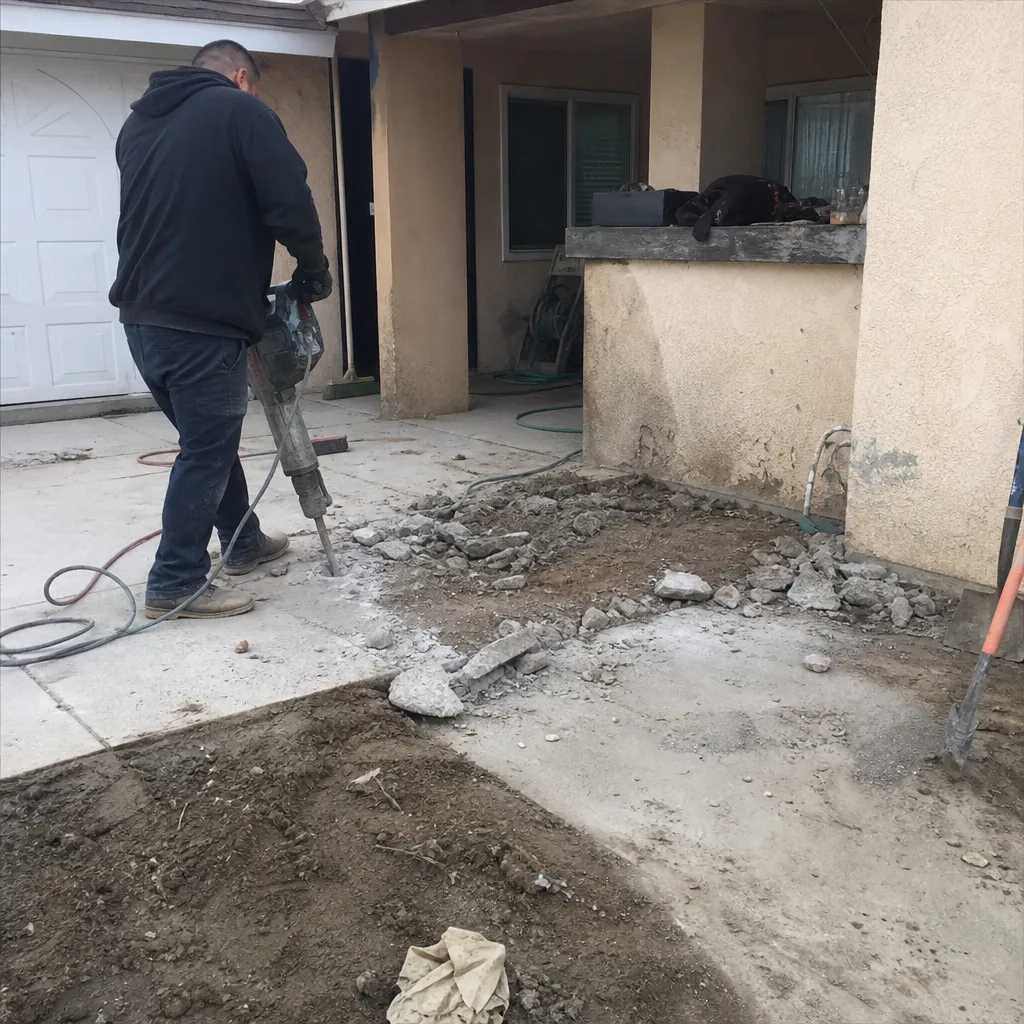 Before
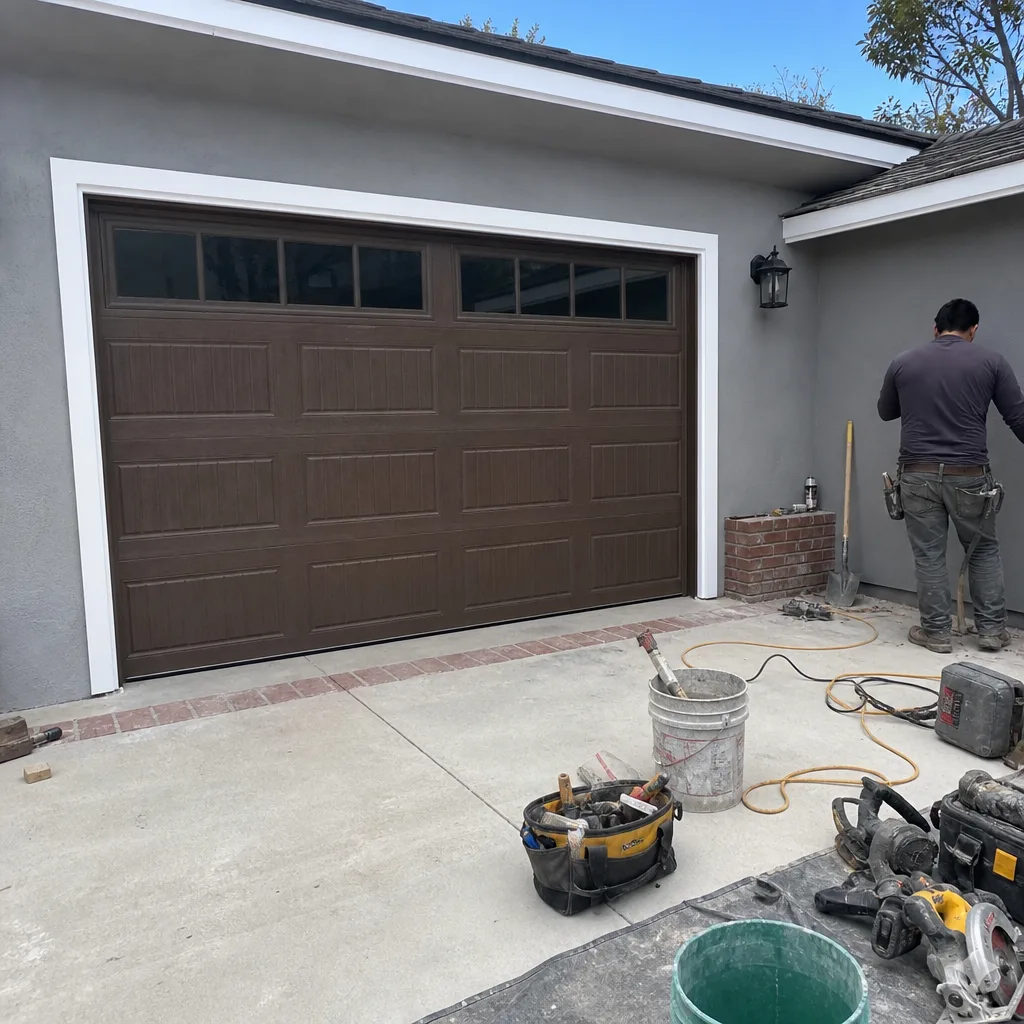 After
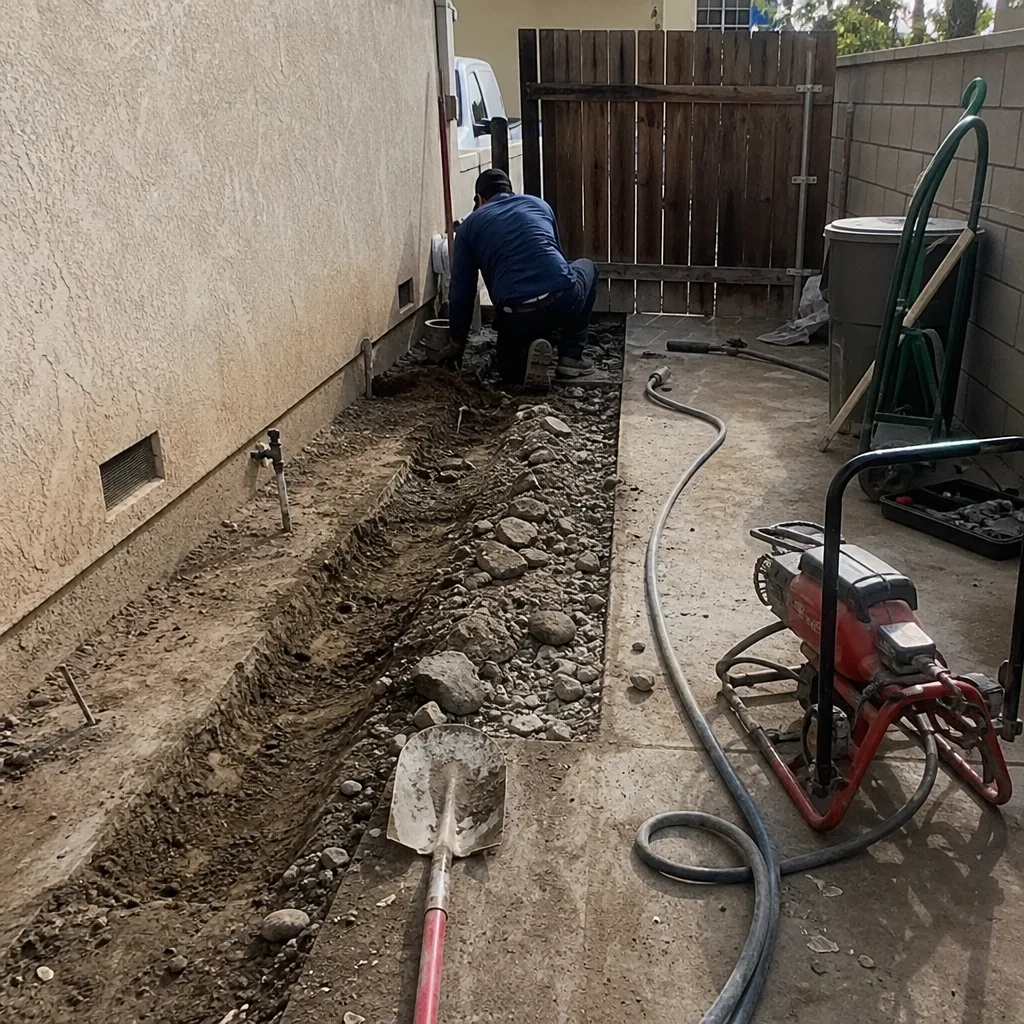 Before
 After
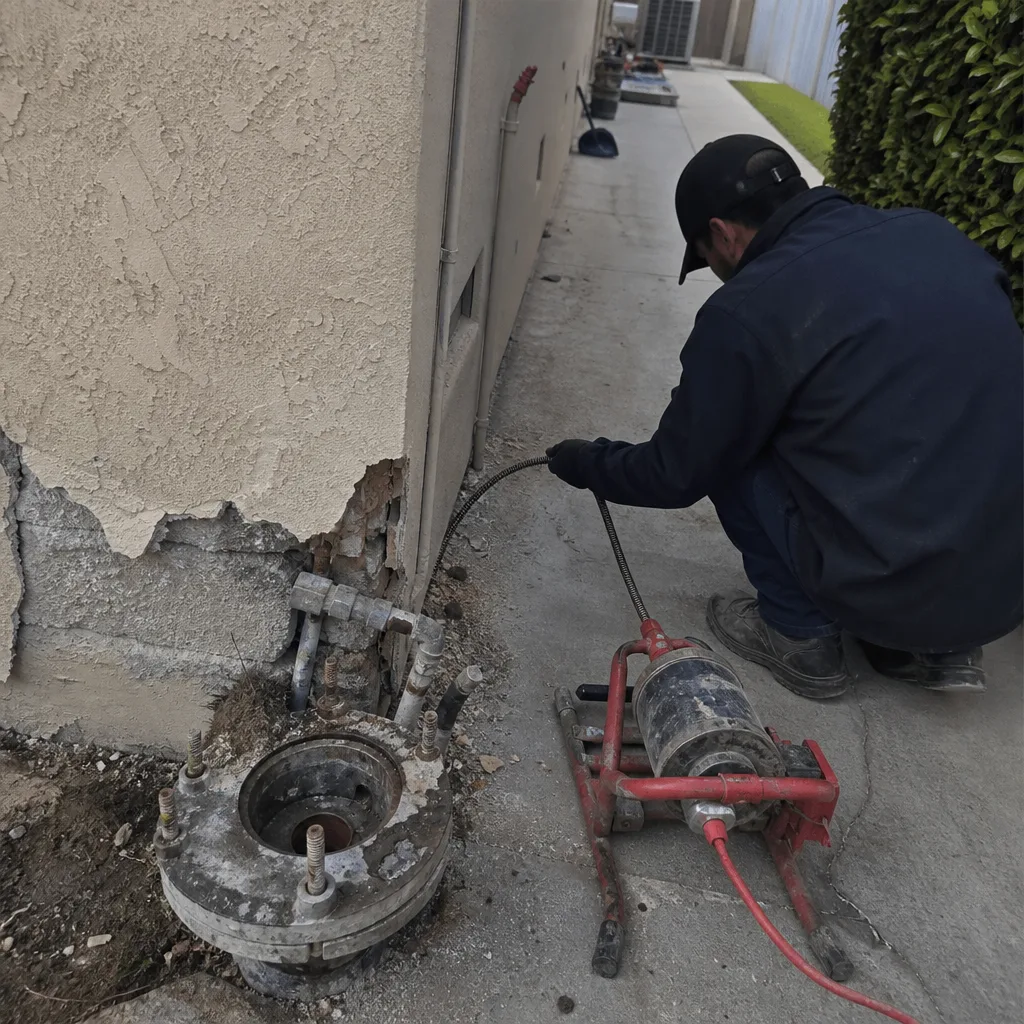 Before
 After